Why it exists
A robot needs to translate raw sensor readings and timing into repeatable motor decisions.
Portfolio / CASE STUDY
Academic firmware projects
Three STM32 builds that turn distance sensing, reflectance sensing, and timed motor control into robot behavior.
Embedded programming and lab work
A robot needs to translate raw sensor readings and timing into repeatable motor decisions.
These three repositories document maze navigation, line following, and a programmed drawing sequence. They share a microcontroller platform and exercise different combinations of sensing, timing, and motion.
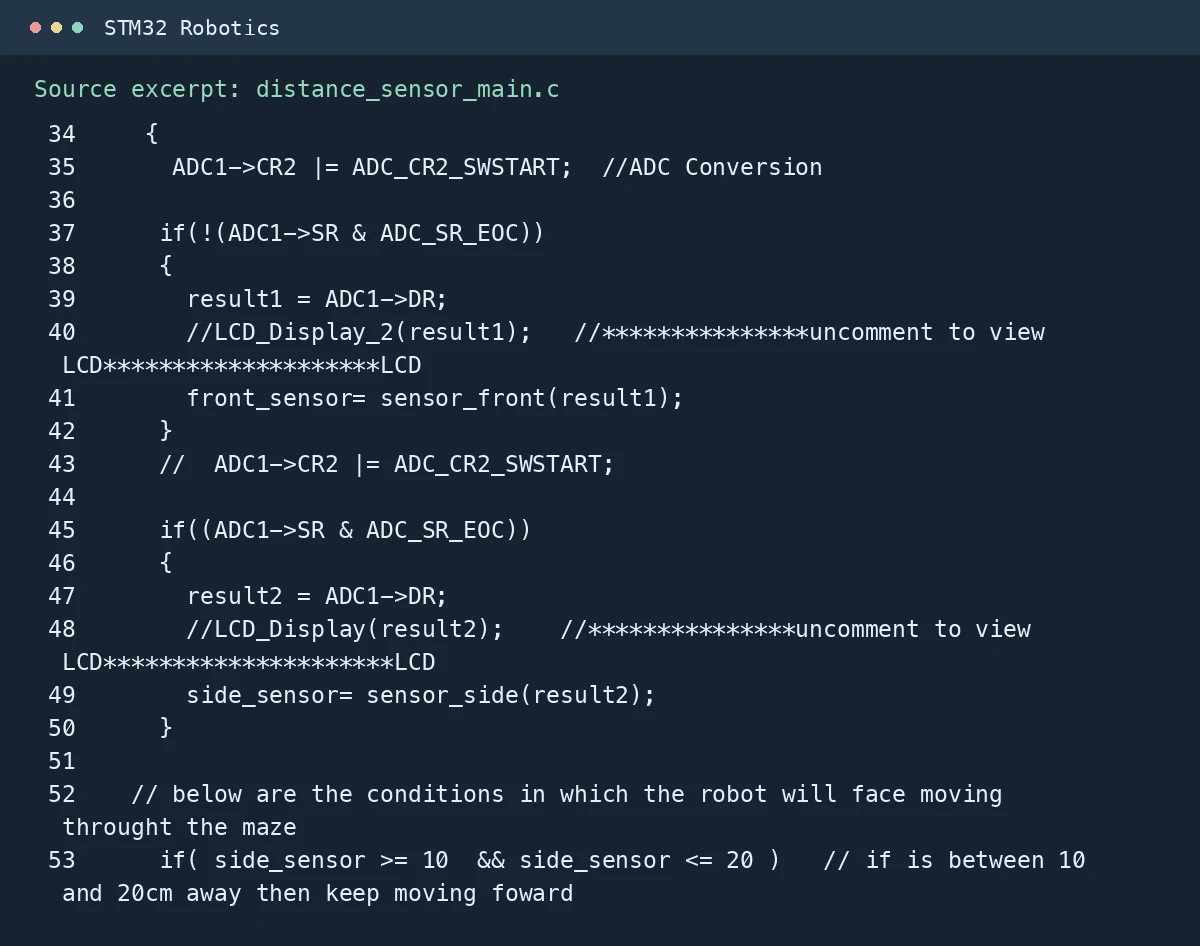
The maze follower reads front and side distance sensors through the ADC and adjusts motor behavior against measured thresholds.
The line follower combines reflectance readings and motor outputs so steering can respond to the surface beneath the robot.
The drawing robot uses timed motion to create a pattern. Startup and microcontroller register definitions make the hardware boundary visible in the source.
Academic lab projects on STM32 hardware. The portfolio capture shows an excerpt of the firmware.