Why it exists
Computer vision needs to connect a model to a usable experience: camera access, inference, overlays, and controls that suit the available hardware.
Portfolio / CASE STUDY
Computer vision experiment
A local camera detection experiment combining YOLOv8, OpenCV, and a Flask interface.
Local inference and interactive controls
Computer vision needs to connect a model to a usable experience: camera access, inference, overlays, and controls that suit the available hardware.
The repository documents a real-time camera detection server with a browser interface, selectable detection modes, adjustable processing rates, and a lighter OpenCV fallback. It explores desktop and Raspberry Pi configurations.
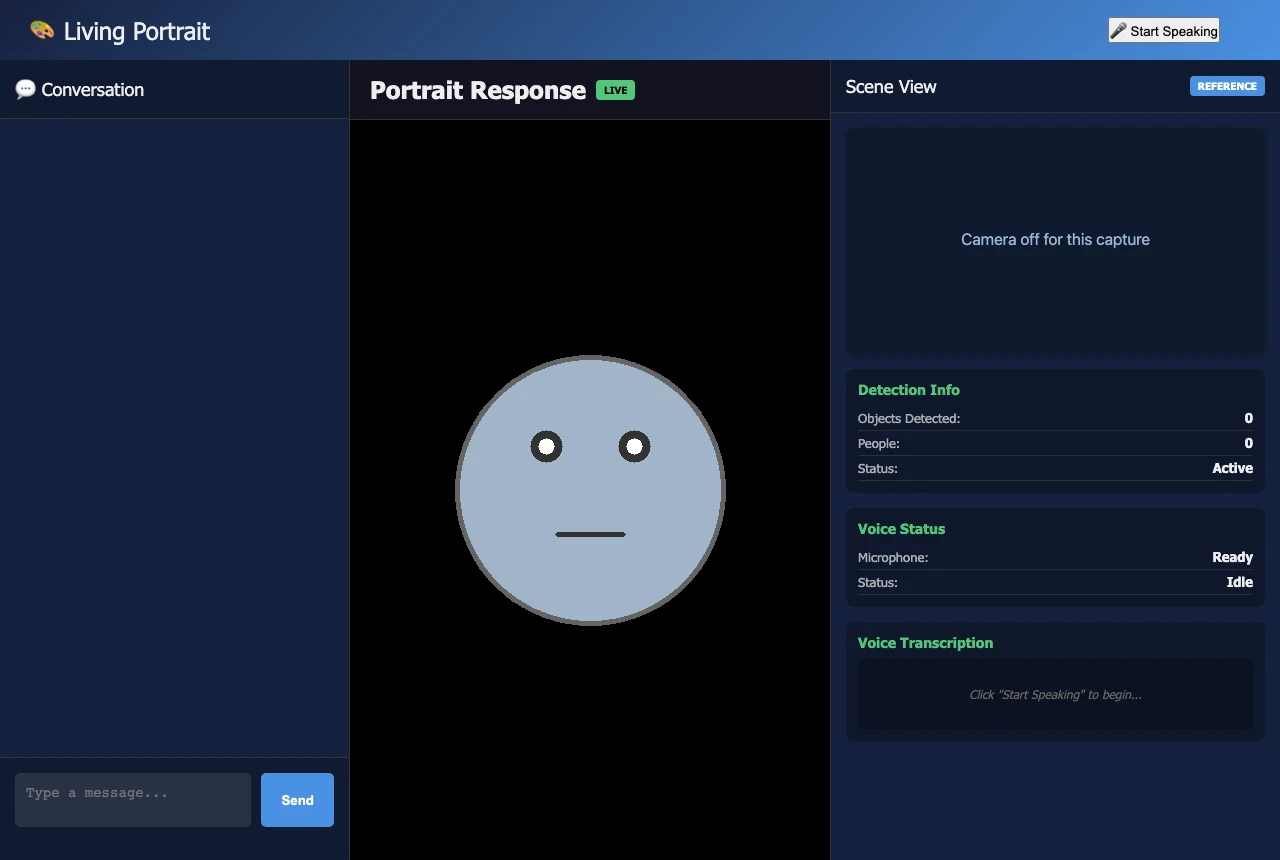
Detection modes and a configurable processing rate expose useful tradeoffs to the operator instead of hiding everything behind a single model call.
The project documents hardware-oriented model options and a lightweight fallback. A configured frame-rate range is not a measured performance guarantee.
The camera, Python inference code, and Flask interface form a compact environment for testing and learning about real-time vision.
A local development experiment with a public repository. Performance depends on the hardware, model, and processing settings.